
Guest reading progress stays in this browser and is not synchronized to your account automatically. Use the learning panel to include browser marks and save them explicitly. Clearing site data removes browser marks.
Your learning notebook
Save courses and review situations deliberately. Load your account records on another device when you want to continue.
Bookmarks and review choices stay in this browser until you load and save an account. Answers and time spent reading are not recorded.
Saved courses
Saved situations to revisit
Find your marked situations by title or topic, then open the original question and explanation.
Your review choices will appear here when this learning view is ready. Use the account controls above to load account choices.
No situations are marked for review in this learning view.
No saved situation matches these filters. Clear the search or choose all topics.
Identification practice
Land access practice
Field decisions practice
Harvest care practice
Give the group a short arrival brief before unloading ↓
Read five waterfowl rules before planning the field visit ↓
Beginner field workshop
Give the group a short arrival brief before unloading
After your pre-trip work, pause at the checked arrival place. Ask each person to explain one part of the same plan. This catches missing links between bird identification, actual documents, land arrangements and the full return.
Original planning exercise, not a season or eligibility decision. No bag limits, hunting hours or permission are assigned here. Use the current provincial and federal sources for the actual person, bird group, location, date and method.
The table scrolls independently. Focus it and use the arrow keys to see every column.
| Briefing question | What to point to | What remains a reason to pause |
|---|---|---|
| Which bird group can we actually identify? | The features seen and a reliable comparison, with uncertain birds left uncertain. | A flock label without the features needed for the intended identification. |
| Which documents and rules apply to each person? | The actual provincial and applicable federal records and the complete relevant conditions. | A receipt, another person’s document or a saved date without its row and notes. |
| Where are parking, the approach and the activity covered? | The exact agreed places, people, period and conditions. | An arrival change, neighbouring crossing or activity outside the confirmed arrangement. |
| Who keeps the group and equipment accounted for? | Named companions and the agreed checks before movement or a plan change. | An unaccounted person, unclear roles or equipment nobody has rehearsed using. |
| Can we complete the return and any recovery needs? | The return route, turnaround point, communication and relevant handling arrangements. | A destination or recovery route beyond the group’s checked access, ground or preparation. |
Practise the conversation and the change
White birds are nearby, but the view does not establish the species. What now?
Keep the identification unresolved. A planned Snow Goose outing does not make every white bird a Snow Goose; choose observation or another prepared activity instead of making the label fit the plan.
Use the identification lesson to name the missing features. A clearer view can improve identification, but the applicable documents, season and location still need their own checks.
The agreed arrival place is unavailable. Is the next field a ready fallback?
Only if that alternative has its own complete checks. Do not transfer the first field’s access answer, species observations or document assumptions to the next field.
Use the already prepared alternative, clarify from a place you may use, or end the visit. A late arrival is not a reason to skip the group brief.
A possible recovery route crosses land outside the confirmed arrangement. Is that part settled?
Treat the route as an unresolved part of the plan before proceeding. The activity area and the route needed afterwards are separate questions; do not assume an animal crossing a boundary grants permission to follow.
Resolve access and practical recovery arrangements with the responsible people and current guidance. If the group cannot explain a workable complete return, revise or stop the plan.
Check actual requirements with the official sources
Read five waterfowl rules before planning the field visit
Use these short cases with your actual bird group, location and licence. A provincial Game Bird licence does not turn every bird into the same federal category. Keep the applicable source row with the trip plan.
Source check: Sources checked 2026-11-05, including ECCC’s August 2026–July 2027 Saskatchewan summary. These are selected rules for ordinary licensed hunting, not a complete legal clearance, border-transport guide or live closure service. Match provincial, federal and site conditions and later notices.
Does a spring Snow Goose season cover Canada Goose too?
No. The spring special-measures row names Snow Geese and Ross’s Geese. It does not open a general season for every Goose or Duck.
Teaching situation: A saved autumn screenshot and a spring white-goose row describe different checks. Do not combine their species lists or method notes into a new rule.
Your next check: Identify the bird group, read the correct seasonal row and its equipment notes, then check the provincial licence period separately.
Does moving fields or putting birds in a cooler reset my limit?
Daily bag limits apply to a person’s take in a day; possession limits concern birds held under the applicable legal definitions. Neither a new field nor cooling alone creates a fresh daily allowance.
Teaching situation: Carry the morning’s count into an afternoon plan. Keep a separate running record of birds already held rather than treating each outing as a new total.
Your next check: Read daily and possession limits separately for the actual species group. Use ECCC’s preservation and multi-area explanations before changing how you count.
What identification must remain on an unpreserved bird?
At least one fully feathered wing or the fully feathered head must remain attached for species identification. Plucking or a cooler alone does not establish completed legal preservation.
Teaching situation: Do not turn every bird into an anonymous package at the field. Plan identification, ownership and receiving arrangements before deciding how to handle the load.
Your next check: Read the federal preservation and transfer instructions before packaging. Border entry conditions are another check and are not resolved by this lesson.
Can I use a saved sunrise time from a nearby town?
The Saskatchewan federal summary sets the daily window from 30 minutes before sunrise to 30 minutes after sunset. This does not override a shorter local restriction or other applicable condition.
Teaching situation: A time saved for another place or date is not the time for this visit. A weather-panel daylight display helps planning; it is not a legal-hours certificate.
Your next check: Record the actual location, date, time zone, current rule and appropriate local sunrise/sunset reference. Recheck if the destination or date changes.
Is non-toxic shot only a wetland rule?
For Saskatchewan waterfowl hunting, non-toxic shot is required, including possession while hunting. In National Wildlife Areas that allow hunting, lead-shot possession restrictions also cover upland hunting.
Teaching situation: A dry harvested field does not remove the waterfowl requirement. Mixed items left in a bag can matter even when the intended activity changes.
Your next check: Check the contents of your field kit against the actual activity and site instructions. An NWA listing does not establish that hunting or access is allowed there.
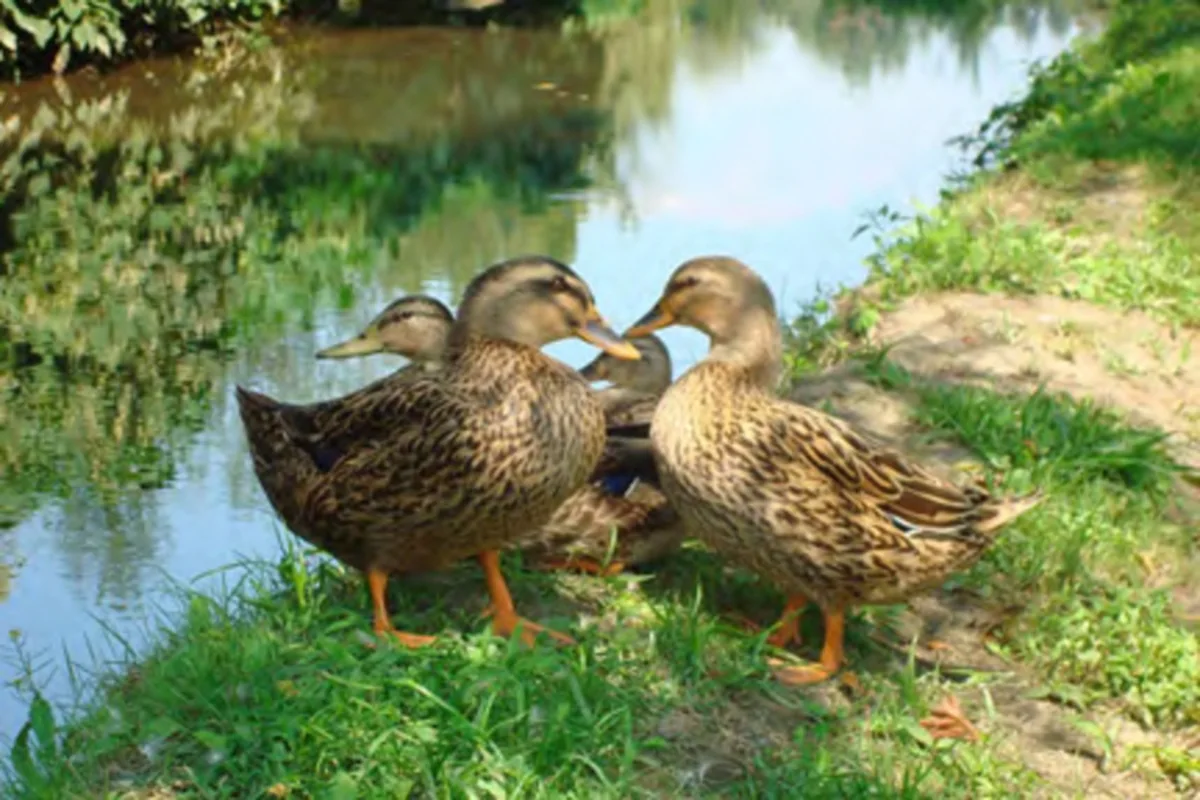
Representative photograph from the credited source, taken outside Saskatchewan. It is not a current sighting, a distribution map or a complete identification guide. This is one example from a wider bird group; other species, ages and plumages can look different.
Image credit: Brooke DiPietro · via USFWS · Public Domain · View image sourceWhat you will learn
- Separate bird identification, site observations and requirements.
- Make a useful observation record without disturbing wildlife.
- Plan a change of location without improvising access.
An original SKHunter learning guide
Build a record, not a prediction
Teaching diagram · not a map- 01Observe
Look from a lawful position without moving closer to obtain an answer.
- 02Describe
Record visible features, time, light, distance and behaviour.
- 03Keep uncertainty
Separate what you saw from what you think it might mean.
One clue starts a question. Several consistent observations build a better record; uncertainty remains a valid outcome.
Use three layers in your notebook
Keep identification, site use and requirements in separate blocks. In the identification block, write the features you actually saw and any uncertainty. In site use, distinguish birds passing over from birds landing or feeding. In requirements, record the current official references relevant to the particular species group and outing.
This prevents a common reasoning jump: many birds seen nearby becomes “this site is suitable and available.” A distant flock may never use the parcel, and activity on one day does not promise the same conditions next time. A useful note is dated, specific about the observation position and honest about what was not visible.
Describe a visit another person could repeat
Record the start and end of the observation, weather, visibility and the part of the site you could see. Use broad estimates when you cannot count accurately. Describe water or field conditions as observed that day, rather than assuming the map’s wetland outline represents current water.
Observe from a place you may lawfully use and keep enough distance to avoid pushing birds into movement. If their behaviour changes because of your presence, withdraw rather than trying to force a clearer view. Photographs can help later review, but a poor image should not be upgraded into a confident identification.
Prepare the alternative before you need it
A fallback site needs its own species, document, access and approach checks. List the trigger for changing plans: uncertain identification, an unavailable entrance, unsuitable conditions or activity that conflicts with the visit. Decide those triggers at home so disappointment does not turn into a rushed field decision.
Before leaving, review the provincial and federal references together and keep the applicable conditions attached to your plan. Include current health or transport advice where relevant. Your field observations help choose what to investigate; they do not establish a permitted season, lawful position or a guaranteed opportunity.
Worked example: birds overhead, no evidence of site use
From a checked observation location you see several groups crossing high above a field. You do not see them land, and the far side of the field is hidden.
Put it into practice
- Record passing birds and limited visibility rather than claiming a feeding site.
- Keep uncertain identification clearly marked.
- Check whether a later observation is possible from another lawful position.
- Keep the legal and access checklist separate from the sighting record.
Turn a sighting into a useful note
A 36-second photographic motion explainer with gentle camera movement, four clear chapters and large on-screen words. Silent; optional captions and a transcript are available.
Choose a section or use the player controls. A text transcript is available below.
Read the video transcript
- 0:00
Describe what you actually saw — Record shape, markings and behaviour before assigning a species name.
- 0:09
Record the observation context — Add the date, viewpoint, light and approximate distance.
- 0:18
Keep uncertainty visible — A single track or a brief glimpse may remain unidentified.
- 0:27
Revisit without assuming — One sighting is not a population estimate or a promise for next time.
Common mistakes to avoid
Calling every flock the same species
Retain uncertainty and use reliable identification material.
Treating mapped water as current water
Record the conditions you actually observed and their date.
Moving to a nearby field without fresh checks
An alternative must be prepared as its own destination.
A flock crosses overhead but never lands in the visible area. What should your note say?
- Confirmed feeding site.
- Guaranteed birds for the next outing.
- Passing birds observed; site use not established.
Show the answer and explanation
Answer: C. Passing birds observed; site use not established.
The note should stay within the evidence. Overflight does not demonstrate that birds use the parcel on the ground.
Terms on this page
Open a term for its meaning, a common mix-up and the existing guide. English terms and acronyms are retained.
WMZ
Wildlife Management Zone: a provincial zone reference used when locating the relevant Saskatchewan hunting information.
Common mix-up: A provincial WMZ label is not interchangeable with a federal migratory-bird district.
Current checks and official context
Start with the birds and the applicable rules
Identify the species group you intend to pursue and the district where you will be hunting. Open the current federal Saskatchewan summary and the provincial guide together. Use them to check required permits, dates, daily and possession limits, hours and method restrictions; do not apply one species’ rules to another.
- Make a species-specific document and limit checklist.
- Review non-toxic-shot and equipment requirements in the official rules.
- Check whether a special season has different conditions.
Check the actual location and approach
Confirm permission for the place you will stand and any other land needed for the approach or retrieval. Review local restrictions and game-bird closures around specified waters. A wetland shown on the map is a location clue, not proof of access, current water or a permitted shooting position.
- Mark a checked entrance and parking location.
- Plan how to avoid disturbing livestock, other visitors and neighbouring property.
- Use a different verified location if the planned approach is unavailable.
Record observations without treating them as predictions
Scout for current water, bird activity, timing and weather. Save an observation even when no birds are present, and distinguish birds passing overhead from birds using the site. Before departure, revisit official notices for disease-related handling or transport advice. Keep observation notes separate from your legal and access checks.
Turn this lesson into your next outing
Review the date, species, starting template and linked day plan in an editable preparation draft. You choose what to add and save.
Prepare your own trip
Review a preparation draftContinue learning
Work out which licences and documents you needTry a practical situation
One flock, several individual identitiesOpening a draft does not create a saved checklist. A checked item records your own review, not permission or an open season.
Scenario practice
Put your field decisions into practice.
Try 24 situations across identification, access, field adjustments and harvest care. Compare your choice with the explanation, then revisit the relevant lesson.
Original sources
- Environment and Climate Change Canada · Saskatchewan migratory-bird summary
- Government of Canada · Migratory Birds Regulations, 2022
- Government of Saskatchewan · Hunters Guide and updates
- Government of Saskatchewan · Hunters Extras, maps and access
Use this as a planning guide. Check current official requirements and site conditions before travelling.
Help improve this guide
Tell the editor about something on this public page that needs attention.